IV. When the archives do the research: The experience of networking and collaboration in the MSSA Archive
- María José Lemaître, Museo de la Solidaridad Salvador Allende, Chile
The history of the Museo de la Solidaridad Salvador Allende (MSSA, The Salvador Allende Solidarity Museum), is a polyphonic story where different streams of thought,collaboration networks, affects and resistances converge. Based on the artists, intelectual, men and women’s solidarity and fraternity, the museum has a moving history as well as a collection of modern and contemporary art; this group has challenged social and political contexts, some pretty hostiles, in order to make this unique project a reality and even more, to keep it relevant up to date.
This International Art Archives Encounter takes place in a special moment in time. On May 17 of this year, we celebrated the 50th anniversary of the Museum. That same day in Santiago, Chile, 50 years ago in the midst of a vertiginous and enthusiastic international backing of the Unidad Popular, in the Museum of Contemporary Art, located in that time in Quinta Normal Park, the first exhibition of the Solidarity Museum (MS)1 took place; a project that was achieved thanks to a wide network weave by artists, friends and collaborators both in Chile and abroad, backed by the president Salvador Allende and the State.
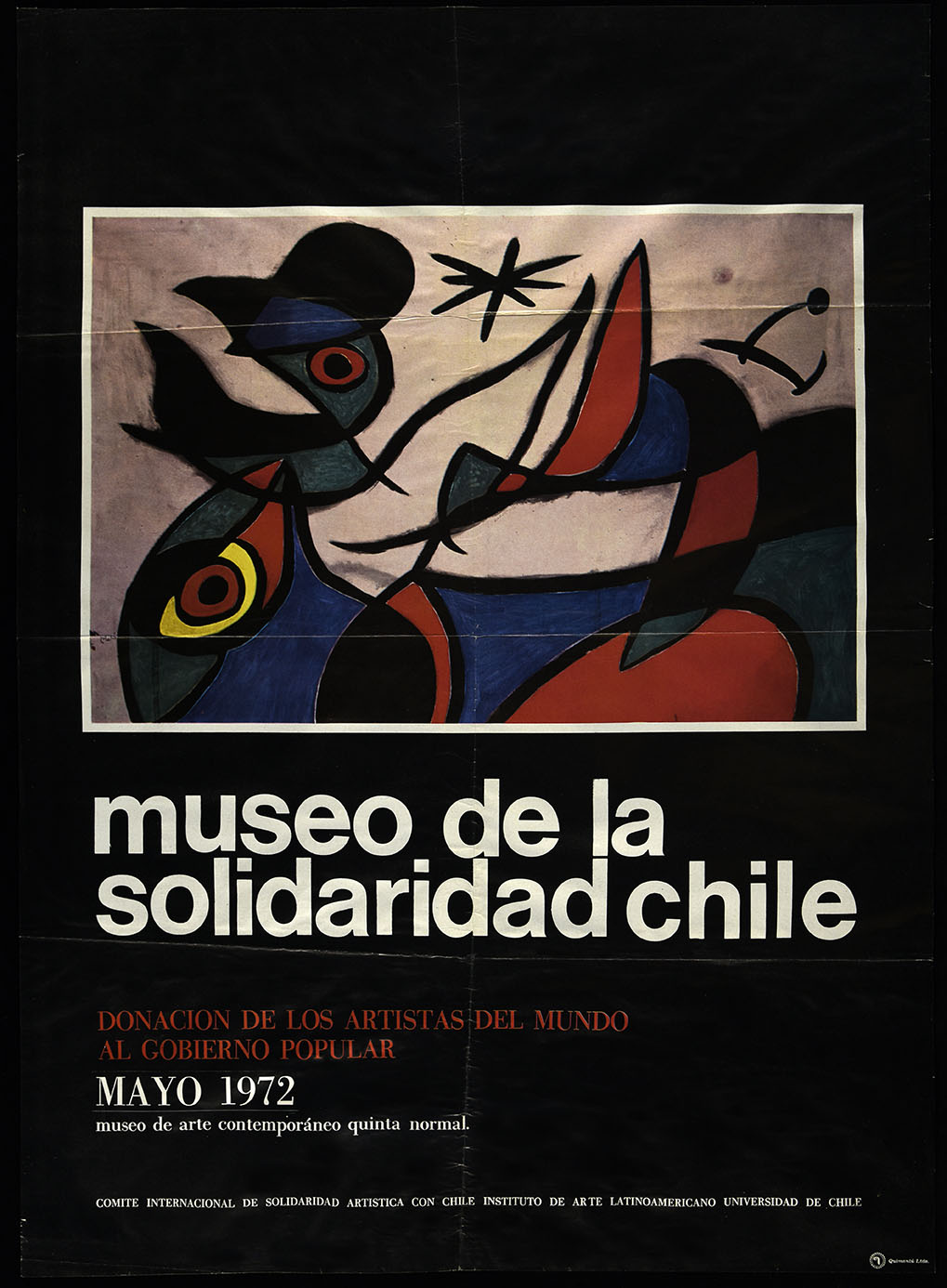
After two years open, three exhibits and the gathering of 670 pieces, the activities of the Museum were abruptly interrupted due to the coup d’etat in 1973, resulting in the hiding up and disappearance of a large part of their collection, as well as the exile of the very committed funding crew.
In 1975, after all attempts to rescue donated artwork that was under the control of the dictatorship failed and the chance to rebuild the project opened up, not in Chile but abroad. A second period of the Museum took place in Cuba and France under the name of the Museo Internacional de la Resistencia Salvador Allende (MIRSA, the Salvador Allende International Resistance Museum)2. In this new stage, the objective of the museum was to support the Chilean resistance against the military government as well as becoming a direct testimony of artists and intellectuals, and a political, financial and propaganda instrument, turning away from its first aim of supporting socialism thus creating a modern experimental art collection for the people3.
In this new period, that lasted almost 15 years, the solidarity networks that arose from the MS, added new agents, countries, thoughts and interests, making this project an odyssey that was possible mainly to one cultural agent that extended its networks and new how to weave new affective, political and cultural relationships: Miria Contreras, ‘La Paya’.
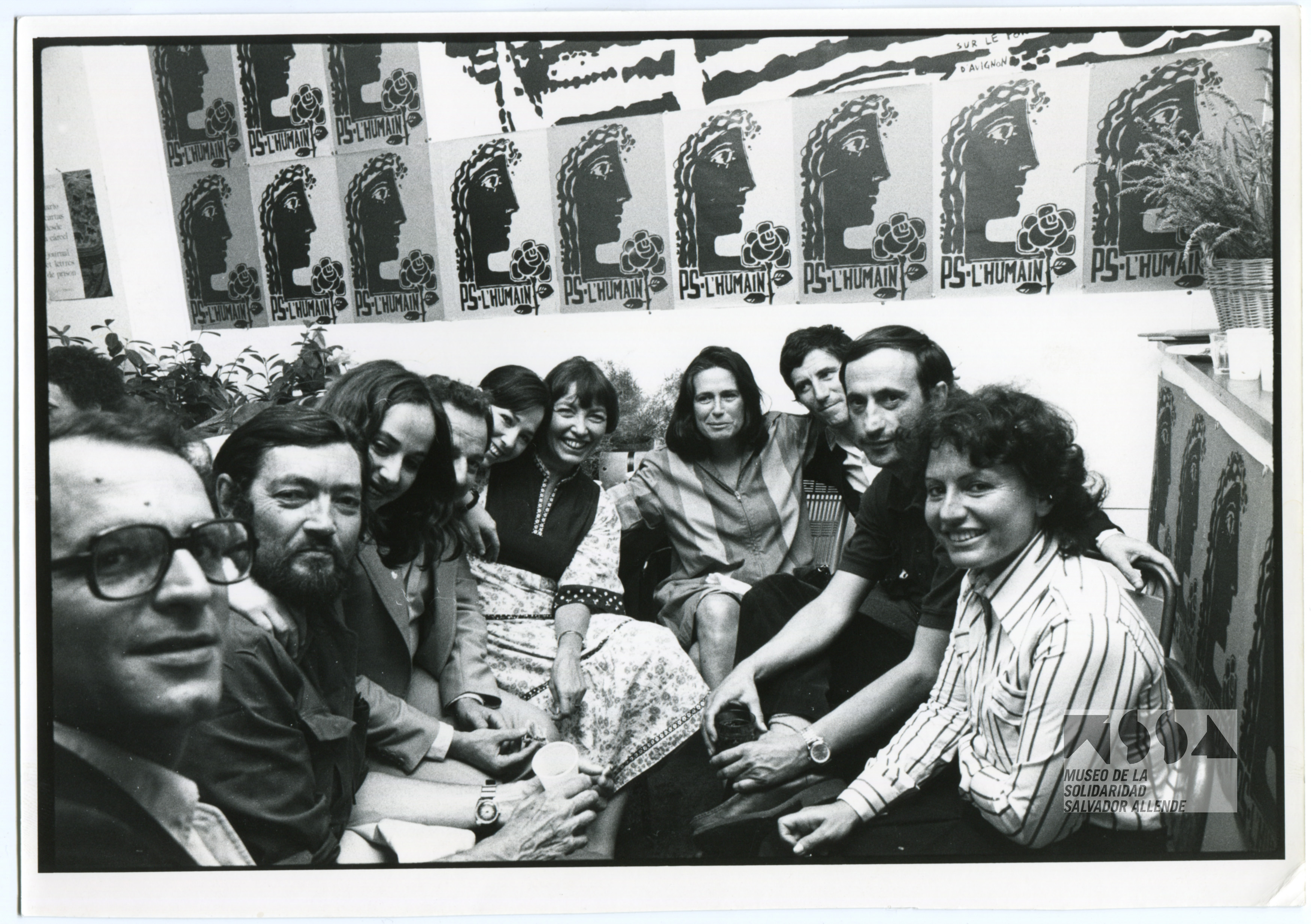
Along with the return to democracy in Chile, in 1990 a new episode in history began with the reopening of the Salvador Allende Solidarity Museum (MSSA), in charge of yet another woman, gallerist and also cultural agent that in previous years had already played an important role as part of the MS staff; Carmen Waugh. Under her leadership, over a thousand donated artworks from artists abroad were returned as well as its Archive, a memory made out of multiple voies, produced in different places and treasured by its custodials.
It wasn’t until the year 2013 that the moved around and protected Archive became official, immediately transforming itself into one of the five main areas in the current museum’s Organization chart. And I mention this, because placing the Archive as a main axis in the organization of a museum institution in Chile is uncanny, at least until 10 years ago, making the avanguard vision of the Museum a key element, providing in this sense more resources, human force and leaving the Archive at the same level of the Collection.
The first step was to build an interdisciplinary team to start the organization and systematization of the Holding, with the purpose of keeping it preserved, cataloged and mainly accessible. Nevertheless, from the reading of each letter and the reviewing of each photography and audiovisual archive some questions arose, but mainly a need and anxiety to rebuild the history behind the museum emerged, which summoned a large group of people. We needed and wanted to know the reasons, ways, processes, challenges, contexts and also affects that were part of this project, that made the impossible possible, and that also positioned itself as a model for other international museum experiences and exhibits, built based on solidarity, as the case of the International Art Exhibition for Palestine in 1978 or the initiative Art for the Nicaraguan People in 1981 or even the collection against the apartheif in Southafrica in 19794.
The Mexican case
Around 2015, parallel to the execution of an Archive from our Document Holding, we developed a large-scale investigation model which not only helped us to get closer, but also to reactivate our many collaboration networks that were created or revitalized in the ‘70s and ‘80s. It needed to be a model aligned with the building of the collection, as almost the totality of the collections of the MS and MIRSA was shipped back from other countries in the shape of donations. We agreed on the way in which we would approach each research: rebuild conversations, links and contexts between Chile and the donor country. From the start, we agreed as a team that the research model we would apply needed to consider both a comprehensive survey and documentary review -in Chile and the donor country-, as well as the oral sources, interviews and execution of conversational tables where artists, agents and people that were part of the creation and evolution of the Museum in its different stages could converge. A methodology that had a double purpose; we wished in one hand to know the journey of those donations and in the other, incorporate new material, reflections and readings to the archive.
And we were lucky, very lucky. Our first investigation project was with Mexico, precisely as it was the first country to donate to the MS artwork. In November 1971, in the Molino de Santo Domingo located in Mexico City, the first exhibition from the first Mexican shipping to the museum fell out5. And when I say we were lucky, I say it as the contexts, situations and people coincided and allowed the project to flow smoothly6. New collaboration networks were being created.
Another aspect in which we agreed on was the design of the model, which needed to have external professionals that could allow the investigation to be accurately revised, analyzed and historically interpreted. Also, for the model to be properly developed it needed to be associated with a cultural institution from the country that was being studied. This is due to two reasons: first, because this type of project, with its characteristics and magnitudes, cannot be done alone for economical reasons and because of human resources issues, and also because it needs to have different views and readings. The second reason, and maybe the most important one, is that the Museum had always, throughout its history, had a close relationship with the countries that have donated and collaborated with, giving room for dialogue, aid and the sharing of experiences. As it happened in the ‘70s and’ 80s we needed them; we needed each other.
The institution to which we associated and got involved for this project had already gone through a significant milestone in the history of art archives and its research. We shared a common language with each other. We decided to associate with the University Museum of Contemporary Art from the UNAM; MUAC.
On behalf of that institution, the curator and current director of MUAC, Amanda de la Garza and the art historian and curator Luis Vargas Santiago, -in that time subdirector of public programs of the institution-, joined the project. The coordination of the project was under my watch and they led the investigation. The months considered for the execution were hard and intense. We had little time for its development, as the project was framed under the 25th anniversary of the establishment of diplomatic relations between Chile and Mexico in 2015. That meant that the information survey and archive reviewing of both countries took place parallel.
To this process, several interviews with artists, agents and intellectuals continued which were part of the affective, political and cultural networks created both in Mexico as in Chile, as well as the development of two conversational tables in the Fundación Alumnos 47 (Alumni Foundation 47) in Mexico. The tables, one political and another artistic, composed by militants, activists and Chilean and Mexican politicians residing in Chile in those years and doner artists in the MS and MIRSA period, seek through the archive and images of the time to activate the memory, rediscover a chapter of their own history, share stories and even understand what led to certain decisions. Its doing also helped to realize that this instance was extremely precious for this type of research and that it should be considered for future projects as it gave room for different voices, contexts and experiences to converge.
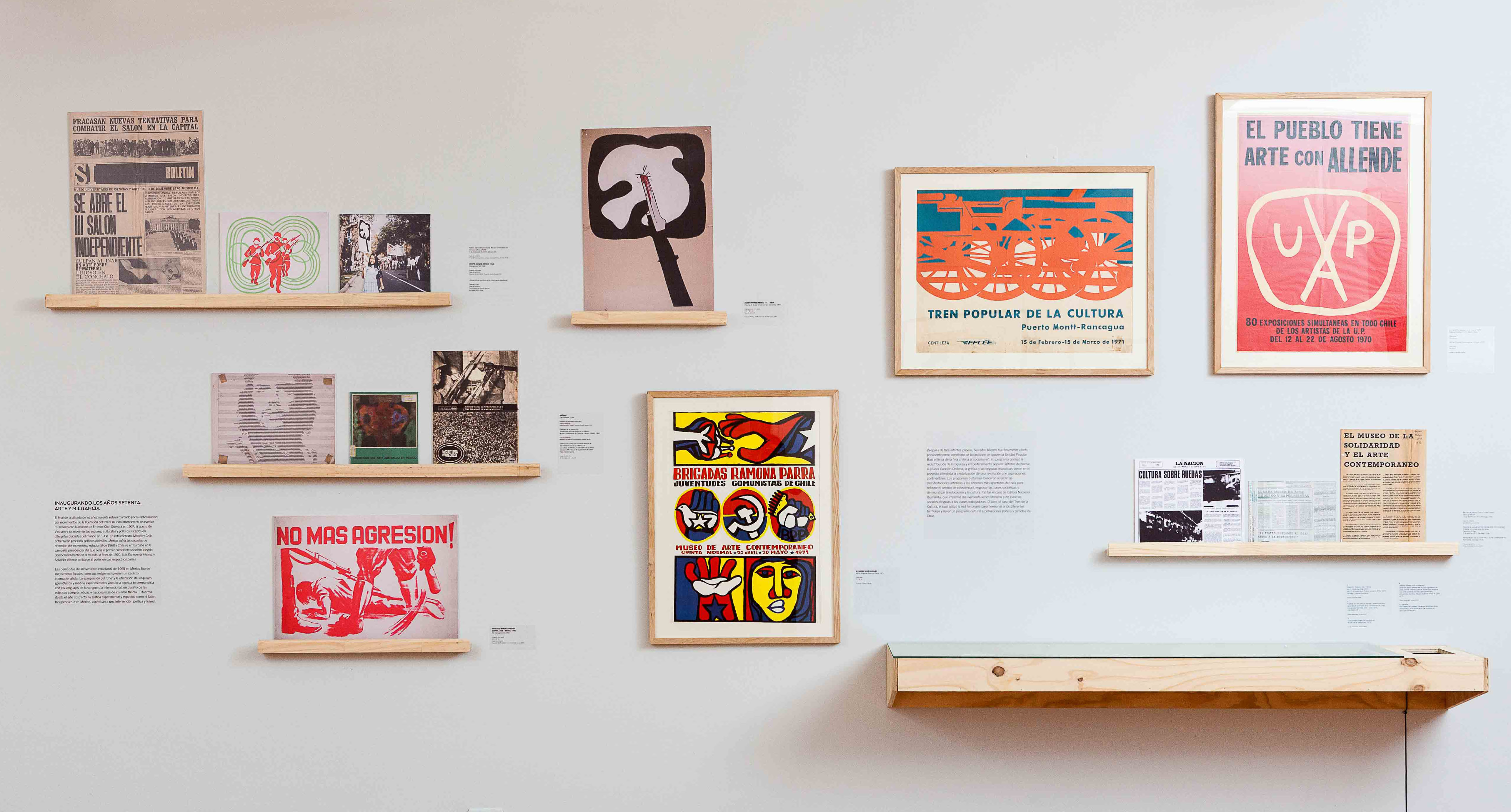
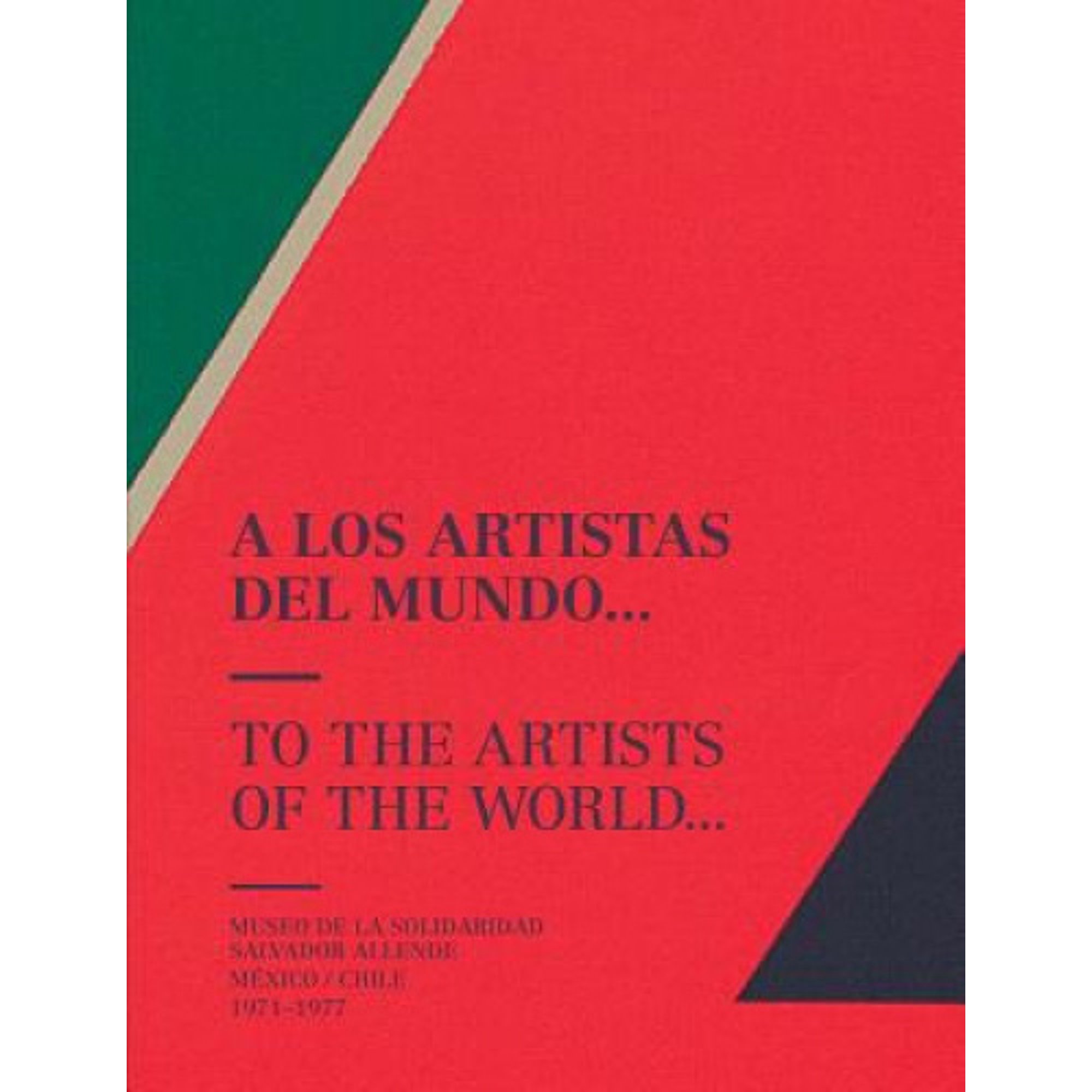
The results of the research became tangible through an exhibit that was presented both in Mexico (MUAC) as in Chile (MSSA)7. To the exhibit, another work of art was added thanks to the archives, interviews and audiovisual capsules: a publication with the conclusions of the research was incorporated8, as well as a selection of searched files in both countries and images of the artworks of the MSSA Mexican Collection and a workshop on archives presentations developed by Luis Vargas. Along the research, we wanted to take the Archive out from the kardeks and showcases, and explore new activation forms.
What was enriching about this project was that, even though we seek to get to know and deepen in our institution’s history, the process meant a huge learning experience on the artistic production of the time for our Mexican peers, as well as on the networks and the agents that were involved, and on how these actions had an impact in the artistic, cultural and political dimension in its own territory.
The cuban case
The second investigation case that I share with you is the Cuban one, which was diametrically different from the Mexican case. Cuba became key for the Museum’s first period. But after that it became even more relevant, as La Habana articulated into the MIRSA in 1975; Miria Contreras was in charge at the time and kept in contact with the collaborators that were in Paris at the time.
Following the same logic of the model applied in the Mexican case, we look out for professionals that could lead an investigation, as well as an institution to which we could associate with. It was not an easy task, as the bonds and networks that have previously existed with the Museum and Cuba had been on hold for years and rebuilding those trusts with a country that is very private and careful with its own history was not going to be easy. Also, we have to add to the equation the difficulties to communicate with the Island, something that remains an issue up to date.
Without any contacts or any type of communication with Cuban researchers, we chose to work with someone that knew about the Museum’s history or at least, part of it and who was willing to work in an unknown yet fascinating field; Carla Macchiabello, Chilean art historian who lived in New York.
Now we had to face the hard part, connecting or establishing a relationship to an institution. The headquarters where Miria Contreras promoted and coordinated MIRSA in Casa de las Américas in Cuba, is a renowned cultural institution, founded by the guerilla and the Cuban politician, Haydée Santamaría in 1959. The cultural space and Santamaría were related to the visual arts in Chile; they were heavily intertwined since the half of the ‘60s, as they invited Chilean artists to play juries in the La Habana Exhibition. These ties strengthened with the Faculty of Art of the Universidad de Chile since 1967, when it become the main interlocutor with the Casa de la Américas.
Between 2016 and 2017, we worked meticulously to reach out with Casa de las Américas. There was resentment, many wounds to heal and institutional relationships to repair. To start with this recovery process, the participation of the Chilean artist and designer Hugo Rivera-Scott was key. He was exiled in Cuba between 1979 to 1992, and worked in the seriagraphy workshop in Casa de las Américas. Once again, the networks from the past played a main role in the construction of present and future ties.
With a very tight budget, we started a project with the support of the Casa de las Américas, mainly with president of the time, Roberto Fernández Retamar; the Memory Archive director, Silvia Gil; the director of the Plastic Arts Department, Siliva Llanes; as well as the artist Lesbia Vent Dumois, who was formerly the director of Plastic Arts in the ‘80s, and Chiki Salasmendi who worked on those your in the Casa.
Thanks to them we were able to access the institutions’ archives and memories, which were highly guarded. We organized a number of trips to La Havana, in order to dive in the documents, conduct interviews, understand its ways of operating and the existing affectations behind it. We also had a conversation table where the previously mentioned people participated, as well as Cuban and Chilean artists that experienced from first hand the carte and fraternity of the Cuban people towards people that were exiled. This instance, as well as in the previous case, was activated by archives, collection of images and questions that were moderated by the MSSA and the researcher.
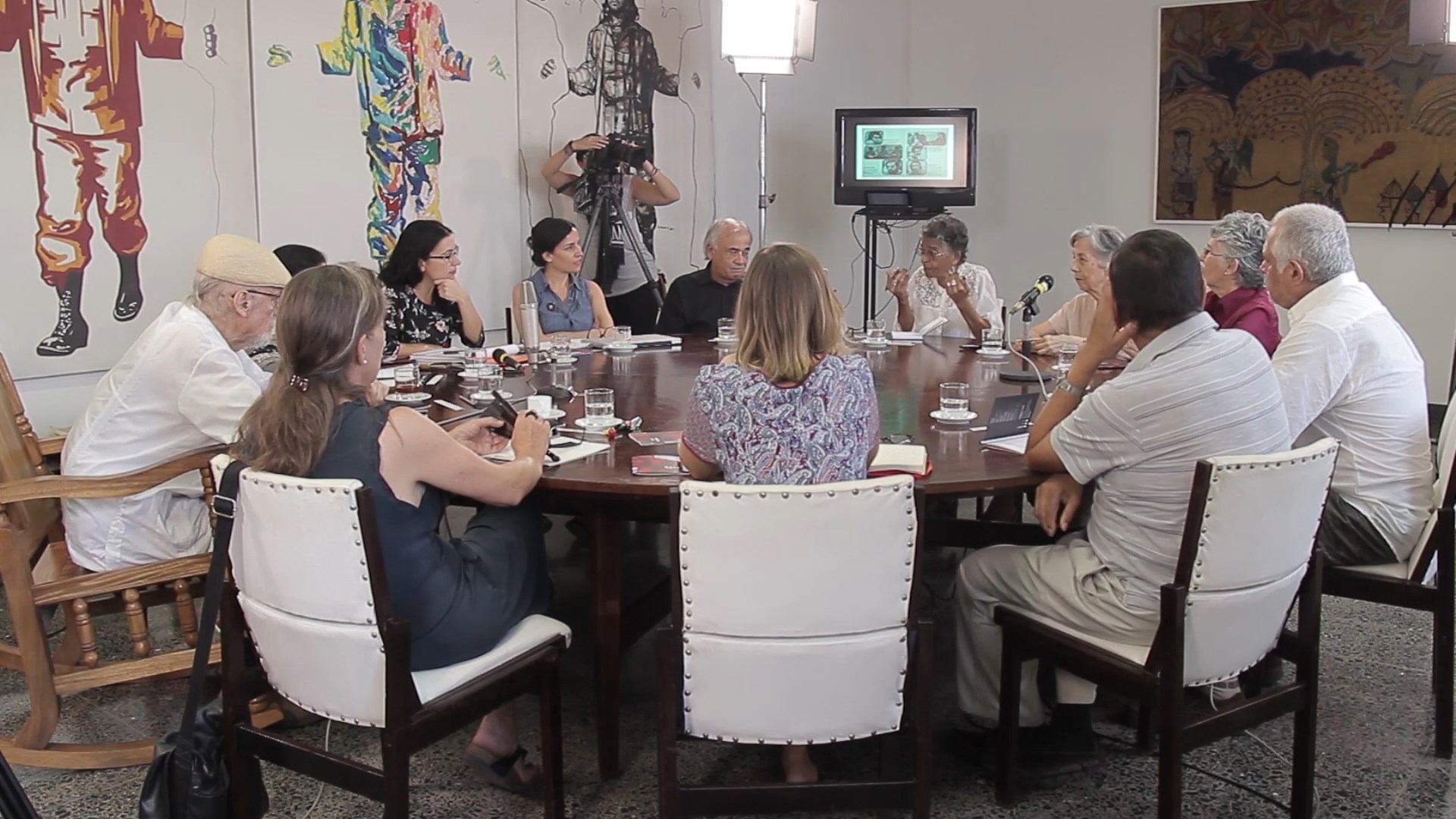
Nevertheless, the time that took us to develop this project exceeded the projection that was first proposed. We have been working for 5 years and we expect to launch a publication that shows this amazing road at the end of 2022. The wait has not been in vain, the time invested in rebuilding these ties has been fruitful and filled with surprises. One important event happened in the trip before the last we did to La Habana with the research team. In one of the first meetings we held in the Casa de las Américas, we toured the facilities and on one of those instances, in the preservation room we found, on the last shelf of one of the bookshelves, a group of boxes that were titled ‘Boxes from Lesbia’. Lesbia Vent Dumois, was once the Director of the Plastic Arts Department of Casa de las Américas in the time when Mirian arrived at the institution. What was incredible about this finding was that in the months to come we were going to discover what was inside the boxes: hundreds of archives, such as documents and photographs, that guarded part of the MIRSA’s origins and memories that were produced and kept safe by Miria Contreras while she was in Casa de las Américas. Documentary pieces which, thanks to the generosity of our partner institution, are kept in our Archive today.
What we can share regarding our experience with the research is that both projects have helped us to rebuild our history by going back and by providing a space to all those voices that were once relevant but later on forgotten. This was an opportunity to work collaboratively and weave new fraternal bonds, and a political and artistic network.
Notes
-
Zaldívar, C. (Ed.). (2013). 40 años Museo de la Solidaridad por Chile, fraternidad, arte y política 1971-1973. Museo de la Solidaridad Salvador Allende. ↩︎
-
Yasky, C. & Zaldívar, C. (Eds.). (2022). Museo Internacional de la Resistencia Salvador Allende 1975- 1990. Ediciones MSSA. ↩︎
-
Contreras, M. (1975, December). Call to artists for the creation of MIRSA. Salvador Allende Solidarity Museum Archive. https://archivo.mssa.cl/Detail/objects/3523 ↩︎
-
Khouri, K. & Salti, R. (Eds.). (2018). Past Disquiet, Artist, International Solidarity and Museums in Exile (Museum under Construction). Museum of Modern Art in Warsaw. Exposición Pasado Inquieto. (2018). Museo de la Solidaridad Salvador Allende. https://www.mssa.cl/exposicion/pasado-inquieto/ ↩︎
-
Catalogue The Artists of the World to the People of Chile. 1st Mexican Consignment, Museo de Arte Moderno Santiago de Chile, Exhibition Molino de Santo Domingo (1971, 26 November). Salvador Allende Solidarity Museum Archive.https://archivo.mssa.cl/Detail/objects/3523 ↩︎
-
The project had the institutional support of the Museo Universitario de Arte Contemporáneo (MUAC), belonging to the Universidad Autónoma de México; the Agencia Chilena de Cooperación Internacional para el Desarrollo; the Agencia Mexicana de Cooperación Internacional para el Desarrollo and the Embassy of Mexico in Chile, through its former Ambassador, Otto Granados Roldán. ↩︎
-
Exhibit A los artistas del mundo… Museo de la Solidaridad Salvador Allende, México/Chile 1971-1977. (2016). Museo de la Solidaridad Salvador Allende y Museo Universitario de Arte Contemporáneo. <uhttps://www.mssa.cl/exposicion/a-los-artistas-del-mundo-museo-de-la-solidaridad-salvador-allende-</u <umexicochile-1971-1977/</u; https://muac.unam.mx/exposicion/a-los-artistas-del-mundo...) ↩︎
-
Álvarez, E. (Ed.). (2016). A los artistas del mundo… Museo de la Solidaridad Salvador Allende, México/Chile 1971-1977. Editoral RM. ↩︎