X. Frailty and Overruns: Open Archive of the Chilean Theatrical Scene 1983-1992: reflections on the exhibit of theater photographs by Jorge Brantmayer
- Patrizio Gecele Muñoz, Centro de Documentación de las Artes y Archivos Originales de la Facultad de Arquitectura de la Universidad Católica
Showing the archive is a way to share and to make known the practices, experiences and paths that undoubtedly marked us. Exposing the archive is the result of the questions that arise from our own practices. Exhibiting is activating and at the same time intervening the archive. Every staging is a way to reinvent it as each presentation is a new visibility device.
(Carnevale, Expósito, Mesquita, Vindel, 2015)
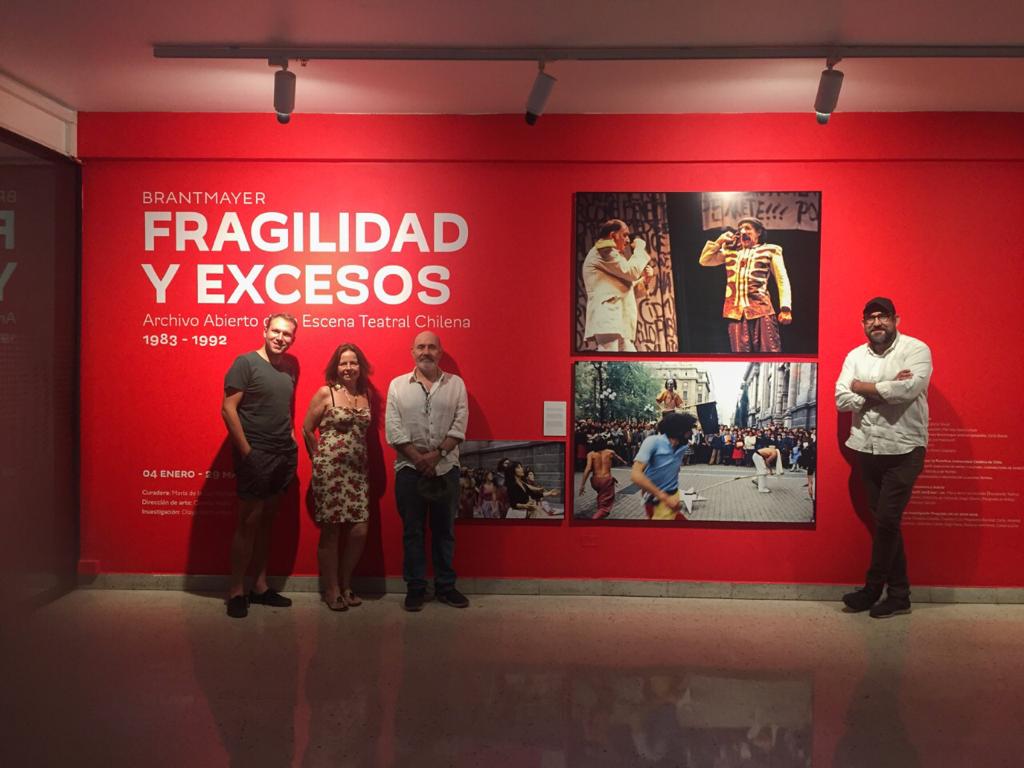
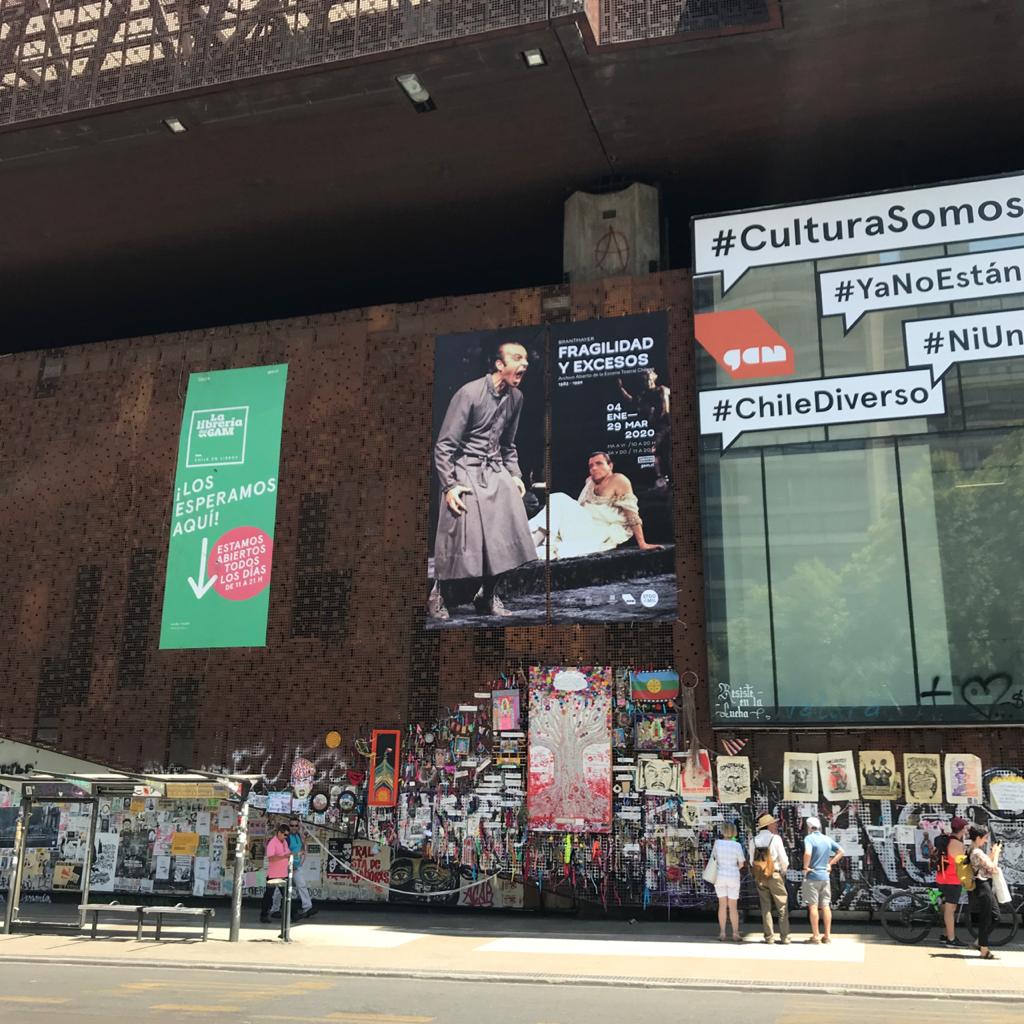
How can we activate and share an archive of theater photographs? Which practices or methodologies allow us to disseminate a collection with such characteristics? In which way does the archive become a piece and this becomes an archive? The proposed presentation seeks to answer these and other questions from an specific project: The exhibit of theater photographs from Jorge Brantmayer; ‘Frailty and Overruns: Open Archive of the Chilean Theatrical Scene 1983-1992 (Fragilidad y Excesos: Archivo Abierto de la Escena Teatral Chilena 1983-1992)1, made from the Documentary Holding generated from the images of the Chilean photographer, donated in 2020 to the Archive of the Theater Scene of the Theater School, Pontificia Universidad Católica, Chile2.
The Theater Photographs Archive of Brantmayer
How does the archive turn up? In 2015, María de la Luz Hurtado researched and discovered that Brantmayer had taken pictures from the play Testimonio sobre las muertes de Sabina (Testimony on Sabina’s deaths, 1979) from the playwright Juan Radrigán, directed by Gustavo Meza and with the performances of Ana González and Arnaldo Berríos. As of this, she contacts the photographer and he answers that he has, in a shoebox in the back of his closet, a collection of photographs from the play that he had gather for ten years when he started working at Mundo Diners Club Magazine3, time where he would take photographs of at least two plays every weekend so that these photographs would illustrate the billboard and theatrical criticism of the magazine.
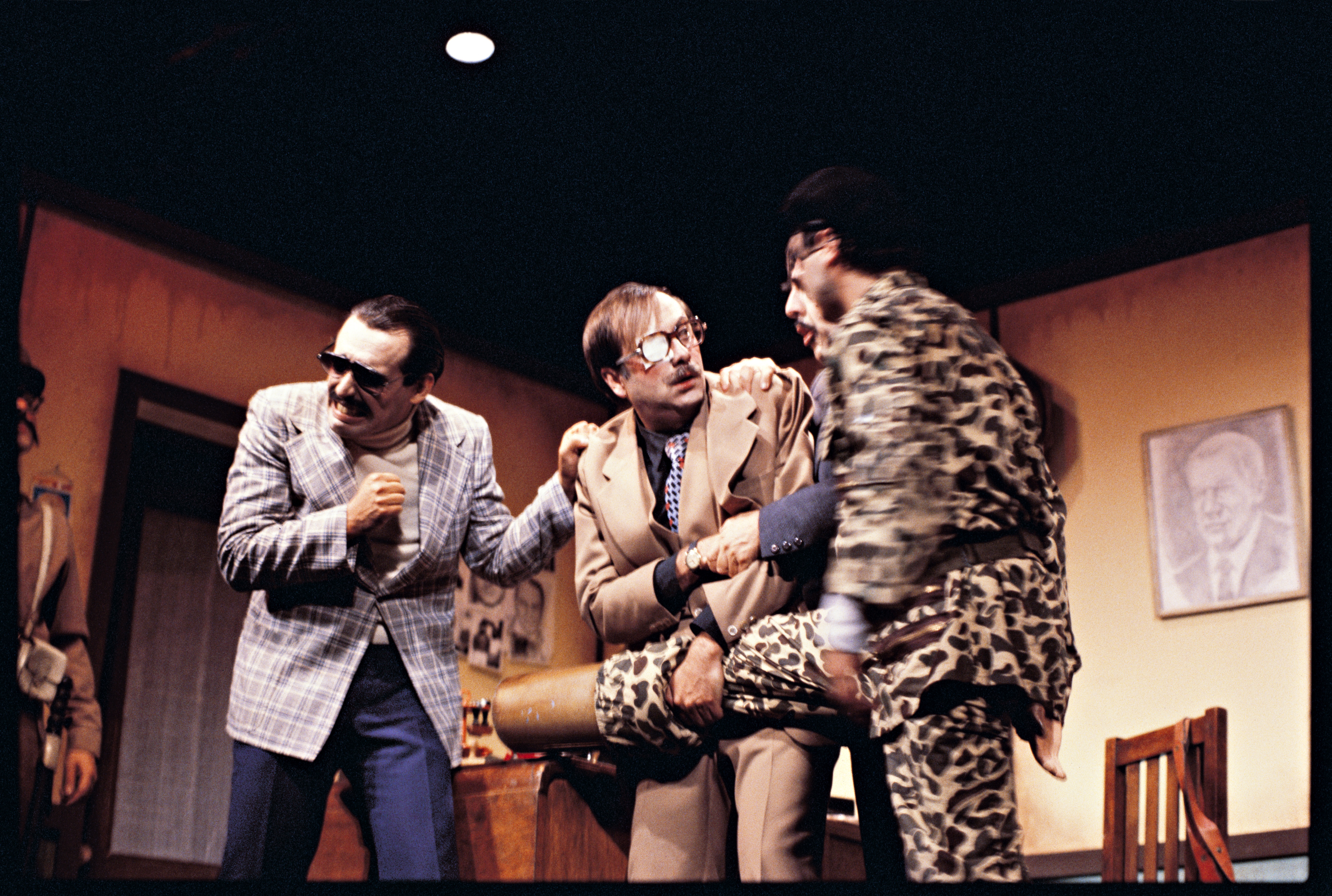
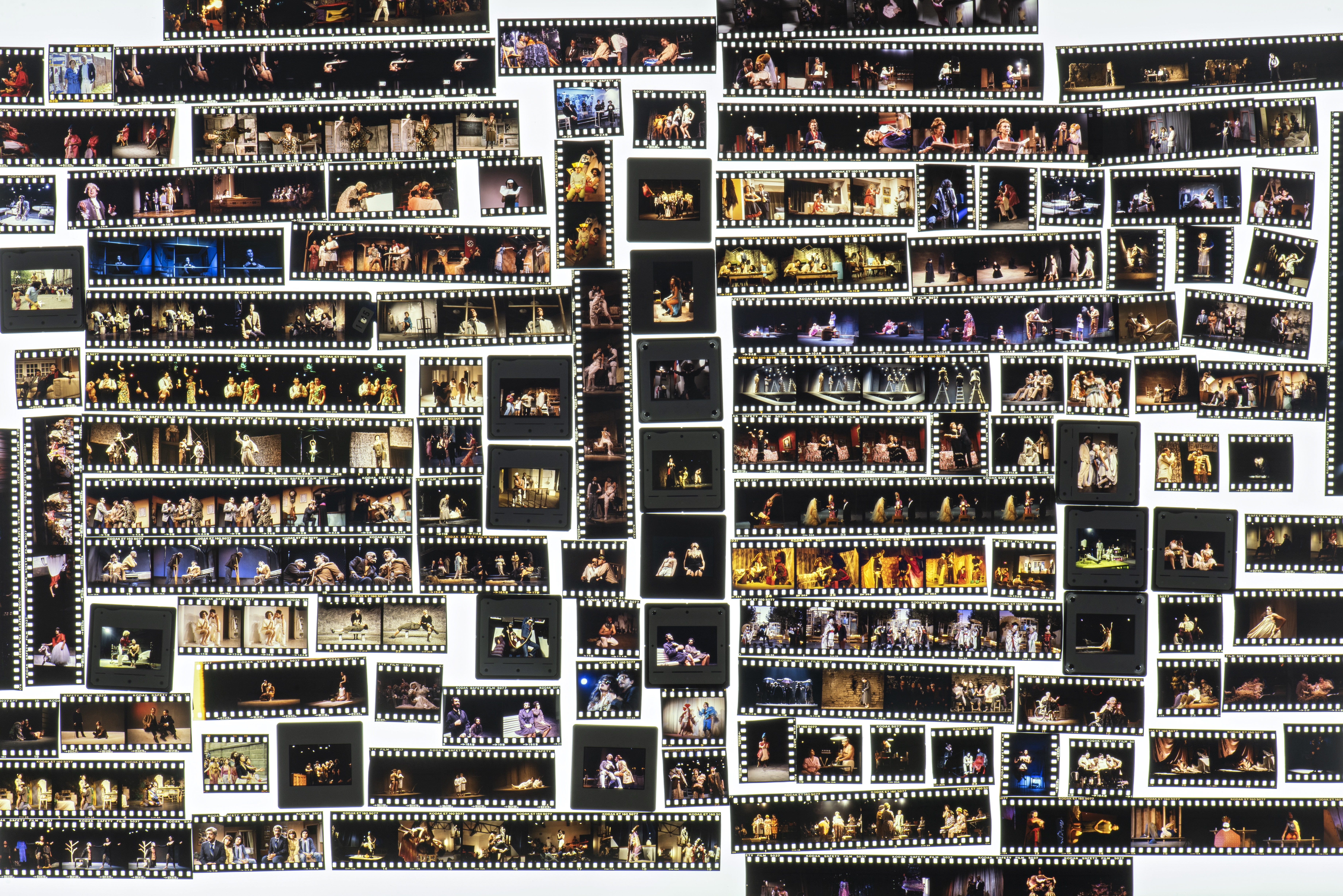
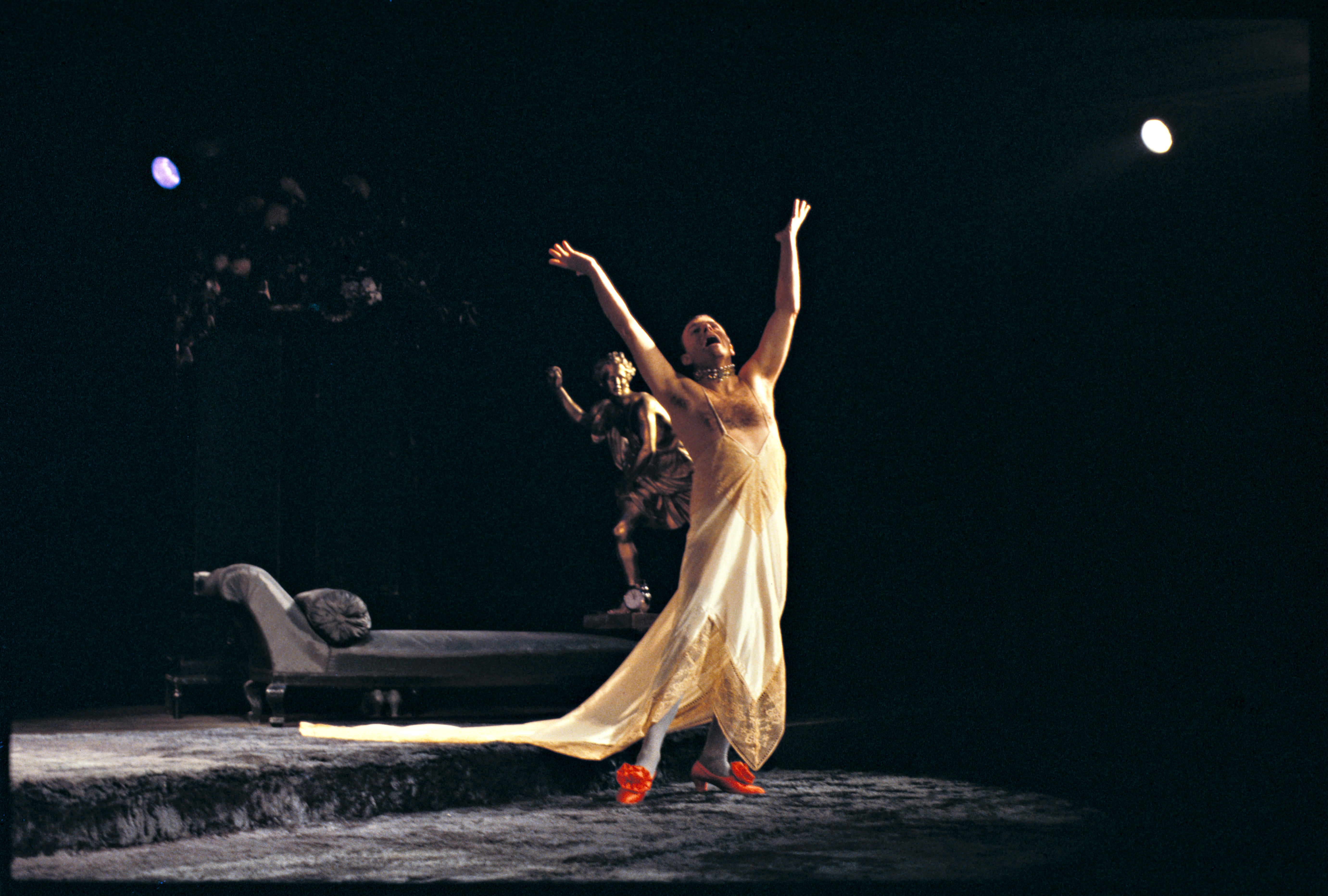
When we opened the box, we were hit with a collection of 1,580 photographs[^4] in color slides that recorded the theater life in Santiago in the last decade of the Chilean’s dictatorship, pictures taken from 140 theatrical stagings, becoming, without a doubt, in one of the largest and more prolific archives of theater color photographies in Chile, and more specifically of the theater in the capital city, as most of the plays were from Santiago, except in one occasion were the record is from a play in Valparaíso. It is important to clarify that the images were taken during the performances so there are very few pictures where the artists posed; most of them give account of the stage action.
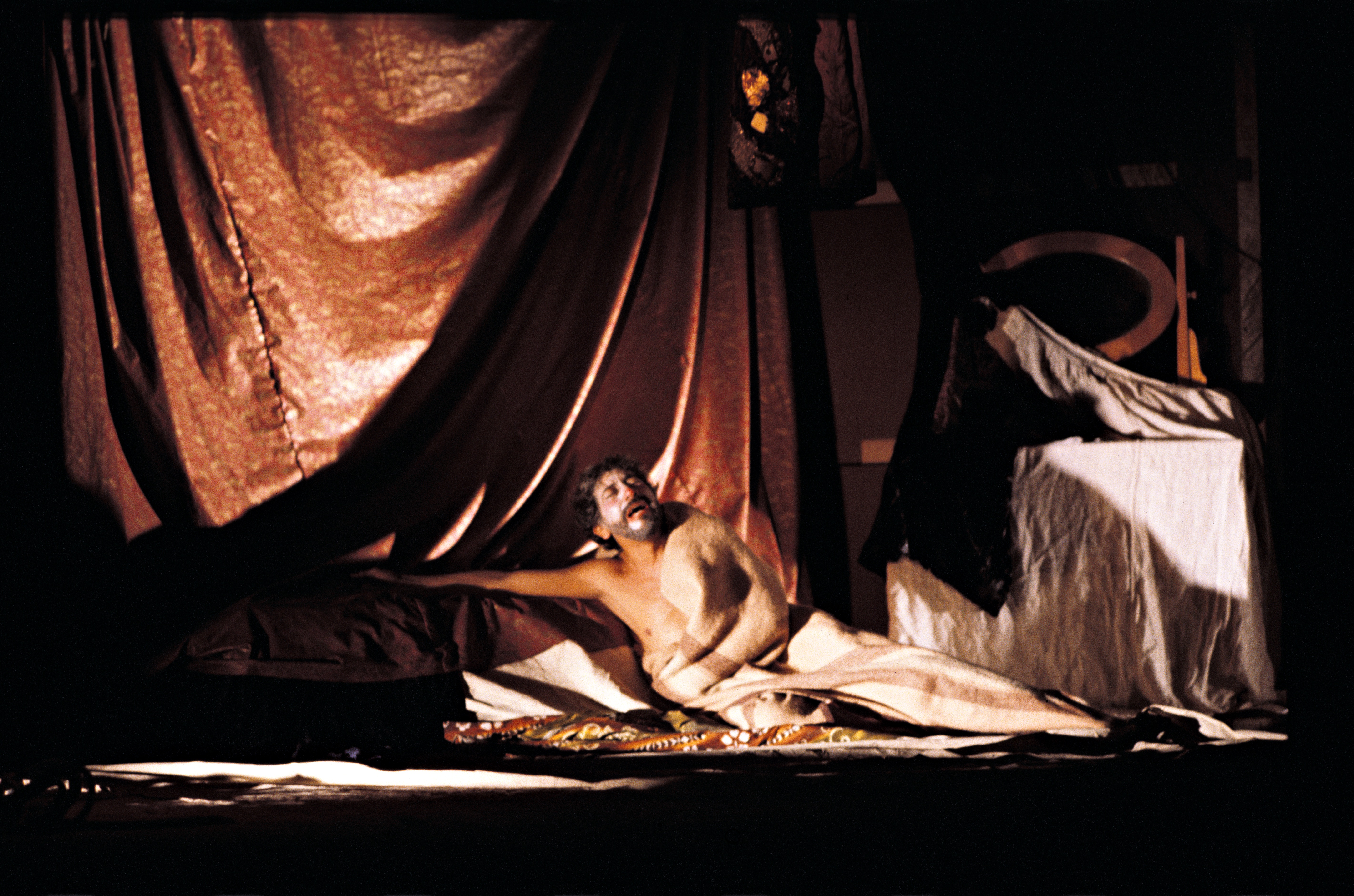
In this sense, the images are a record of a second from a 50 to 70 minute play. In terms of the object material, the photographs were in great preservation state and one of the technical peculiarities that calls the attention in terms of visuals, are the intense color that are projected in them, considering how dark the theater rooms were and the precarious illumination set in the stagings and in the spaces. Notably, Brantmayer was part of the whole process, which was key to have a technical-photographic point of view. It was relevant, from the first digitalizations up to the lighting fixes and touch-ups of the curated pictures. In this sense, it was the artist who rebuilt and gave new meaning to his archive.
How do we study and keep record of an Archive of theater photographs?
First, when the archive arrives it is ordered and organized, then it is digitalized in order to research and observe the pictures more extensively. Later on, a stage of identification, ordening, cataloging and documentation takes place. Though the photograph had kept the images organized, the only information we had was the title of the play, and in some cases there were a lot of unidentified or wrongly identified pictures, therefore the research work at first consisted in identifying the title of the play for each picture. After that, the work considered a new ordering and cataloging, possible thanks to the companies, theater groups and production houses that staged each piece. From that point on, a code was assigned to each image.
Once the archive was organized and systematized, the documentation work started, that is to say, the identification of every data and metadata of each of the photographs, a task that was efficiently done as it was possible to digitize all the Mundo Diners Magazines from the archive date, so we were able to record: year, company, theater space and all the artistic-technical credits; author of the piece, dramatization or translation (if applicable), direction, stage and lights design, theatrical costume, production and crew.
The production model of the project is a hybrid: on one hand, we have what was provided by the University; the institutional backing, professionals that were available for the task, infrastructure and certain technical equipment, and on the other hand, we had external financing, in this case we had the financial support of three other projects and institutions; the Vice Rector of Research from Pontificia Universidad Católica de Chile, a FONDART project (from the State), and contributions from private institutions such as the Corporación Cultural de la Cámara Chilena de la Construcción (Cultural Corporation of the Chilean Chamber of Construction)[^5].
After receiving those resources, a research team made up of teachers[^6] and a group of students was built in order to link the archive to different generations, many of which have not lived under the dictatorship. Having an intergenerational research team was very beneficial, as it allowed us to discuss and reflect from different perspectives; on one hand, we had the generation that lived in that period and had even seen the pieces of the photographic archive, and on the other hand, we had those who were born in democracy and didn’t live in dictatorship, thus helping us to transform, fragmentate and widen preconceived ideas of the time and to create a different imaginary.
The historical and artistic research was meaningful and revealing to the team, as they were able to rediscover the Chilean dictatorship, topic that has been widely studied, but from new images and representations provided by the theater which debunks the myth that there was a “cultural shoutdown”, making visible the strong and hyped theatrical environment filled with powerful artistic proposals. Once the investigation began, we were surprised to find topics that went beyond the repression and the violation of human rights that could be found in the theatrical development of the time, where the party, the color, the music, the show, the sequins, the pop-art and popular manifestations would emerge. All of this, under a very interesting aesthetic provided by the mix of the old and the neoliberal modernity. Another great discovery was the chance to account for feminist and transgender proposals that used to be associated to a pre-dictatorship era. These were already established scenic means in the Arts and in theater, which could be found in a symbolic and indirect, or in a concrete and expressive way.
From the viewing of this entire archive comes the title ‘Frailty and Overruns”. The first concept emerges from the frailty of theater at the time, which was produced with little resources, in a time where there were no open call fundings (like the ones that the State currently offers), and also because of the frailty of the actresses, actors and creators’ bodies who were exposed to proposals that could be censored and that could lead to consequences beyond the stage. The second concept, on ‘overruns’, makes reference not only to the overruns of the repression, but also to the party, the madness, and the grotesque, satirical and ironic artistic proposals.
The process was long and lasted more than two years, but in it we understood that not all information could be taken out of magazines, -as the information on the plays and cast was incomplete-, and that posed the question: How can we identify who was who in a picture? This is why we started to contact and gather the protagonists of these pictures which gave room to the idea of an Open Archive, as in this process we started to share the photographic archive with directors, actors and actresses who helped us in the process of identifying who were the people in the pictures.
From these encounters, something particular and unique occured, as artists and people from this theater provided, donated or loaned other archives that widen the original one: posters, programmes, documents of the creation and production process, censorship certificates and threats, as well as photographs. Thus, we received and gathered archives that extended, broadened and complexified the initial archive made out of Brantmayer’s photographs. Through this beautiful phenomenon of a community network, where the agents of the theater would open their archives to share them with the exhibit, we integrated the idea of an ‘Open Archive’ that would be the main axis of the research and creation of the exhibit. In this way “instead of considering the archive as an institution preserved in the past, I propose to see it as a shared space where one can keep the past incomplete, concept developed by Walter Benjamin”, (Azoulay, 2014).
The role of a context story in the mediation of theatrical archives
How do you visualize and share an archive of these magnitudes and characteristics? How do you share these 1,580 images respecting authorship in the theater? Sharing images of theatrical pieces imply exposing a collective work, that is to say the theatrical photography do not only entail the photographer’s authorship but also a plurality of authorships that goes from the direction, the design, technical support, costumes to the scenographies. Even if we focus solely on ‘the play’, we know it is possible thanks to a production and a theatrical management that allow for its existence and thus, its photography. Besides being an archive in itself, these images are a reflection of what it meant to do theater in the dictatorship (1983-1990). In order to properly mediate these pictures, it became necessary to build a story that could help us understand the creation and production contexts, not only of what could be found in the pictures but also from the pieces that were being portrayed.
A new network is created in this last part of the process. We started reaching out to collaborators from these companies, as well as the creators of the pieces, and something beautiful and meaningful was unveiled as the archive expanded. Each of them began to provide their own private archives, we would hear things like “Look, I have this poster”, “Is it useful for you to have the programm of the play?” or “Here I have pictures of the rehearsals”, and in this way important documents that talk about the context appeared, which after a selection, were part of an exhibit that would allow the audience to understand in a deeper way the content and the shape of the photographs in the archive.
In these stories we could observe themes that were related to the political context of the time; for starters, the violation of human rights in terms of killings, torture, political imprisonment, exile, censorship and curfew, but this time not from the political point of view, but from another universe, the one of Jorge Brantmayer’s photographs. Suely Rolnik notes that the “archive as a device or as a practice is able to activate sensitive experiences in the present, different to that originally lived, but with the same tenor of political density”.
The idea of an ‘Open Archive’ answers to a collective need, this particular archive is built among all, manifesting a unique characteristic of this work: the archive calls the archive. In this case, the archive as a photographic piece, built enthusiasm among agents of the theater that donated archives of different formats, characteristics and meanings that were key to understanding the complexity of these pieces. We had so much material, that we decided to share only original objects, those who were more attractive and could help us build from small chaos or events a story based on the thematic axes. Besides this large recollection, we created new material and new archives: we did interviews as well as new audiovisuals and stories.
Curatorship and staging of the exhibit
How could we, in our curatorship, portray that first impression we had when we saw the unpublished photographs, in terms of essence, energy and impression, to someone who was not the photographer? A process of observing and re-observing the photographs from a sensitive and expressive point of view started along the selecction of images. In this process, we left out, in a first stage, the contexts, the themes or the people that participated in each of these stagings: we decided that the selection criteria would need to respond to a visual and sensitive need, the value of the pictures would have to emerge from the picture itself; then the context would emerge. This is why, as a team, we selected images according to what these caused us. We selected 110 photographs to scan in high resolution and to print and mounted in a large and medium format.
From this investigation and the reflection on the theme and sensitivity of the images, we created four axes or curatorial fields (later on exhibited): a. Helpless and uprooted, b. Power, violence and parody, c. Party and Uncovering and, d. Identities, retrieval and construction.
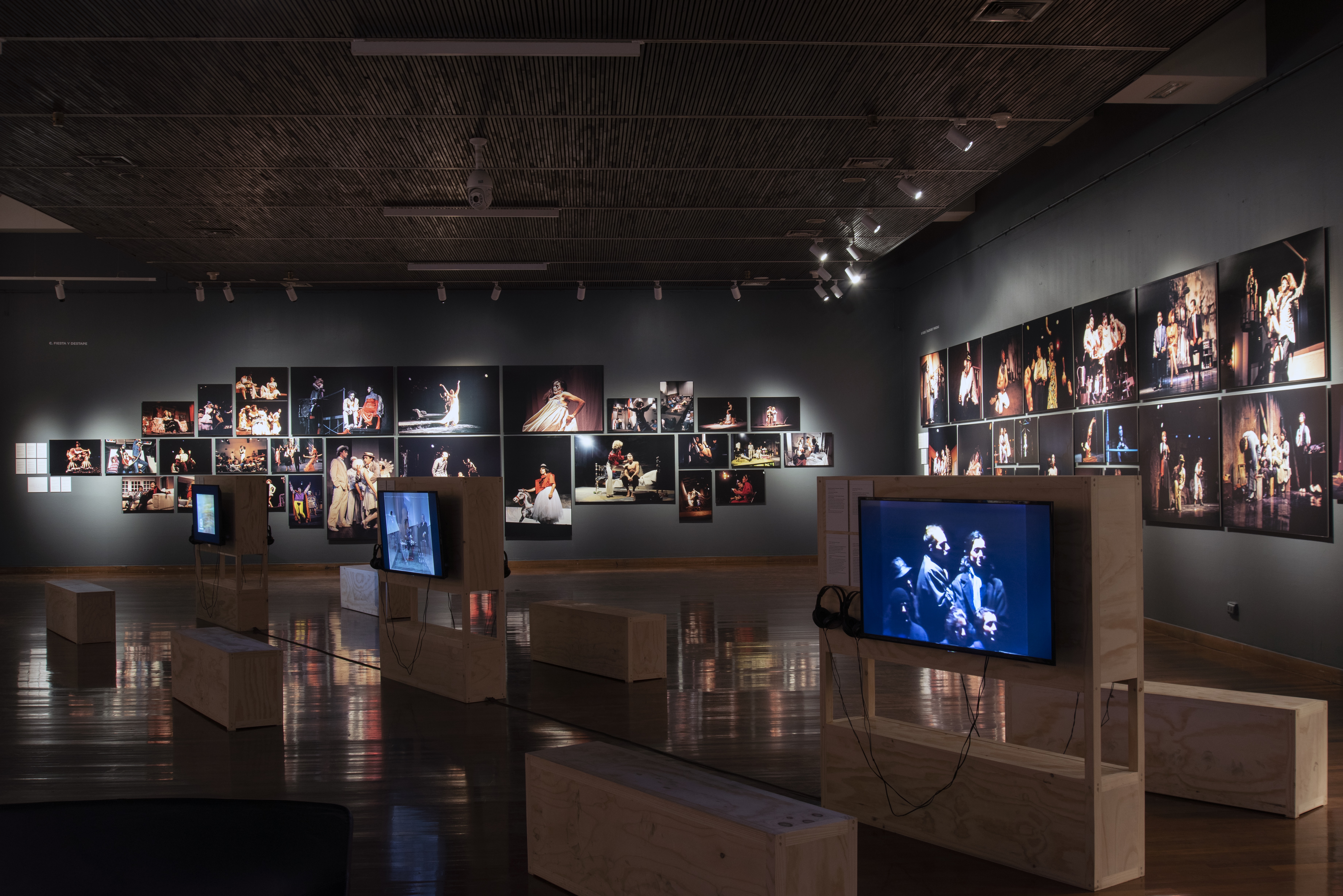
What would happen with the rest of the pictures? Why not open and share the whole archive? From these, we decided to exhibit the printed and staged pictures in an aluminum frame, and to project digitally on a wall the complete archive, picture after picture on loop, so anyone who wanted could see all the pictures standing up or sitting in one of the two couches that faced the exhibit. They could be amazed by the carrusel of images, all properly identified and documented based on the small credits at the end of each picture.
Besides having the printed and projected pictures and recreating the context in a wall, it was key for us to have audiovisuals that could complement the curatorial story from the photographed performances. The staging considered 7 audiovisual pieces (that lasted between 20 to 30 minutes each), displayed in 4 modules and 8 screens. The audience could sit to watch and listen with headphones extracts from some recorded pieces, press clippings on the creation processes and interviews to the creators; all original materials of the time, except for one interview that we did to the director and theatrical author, Ramón Griffero.
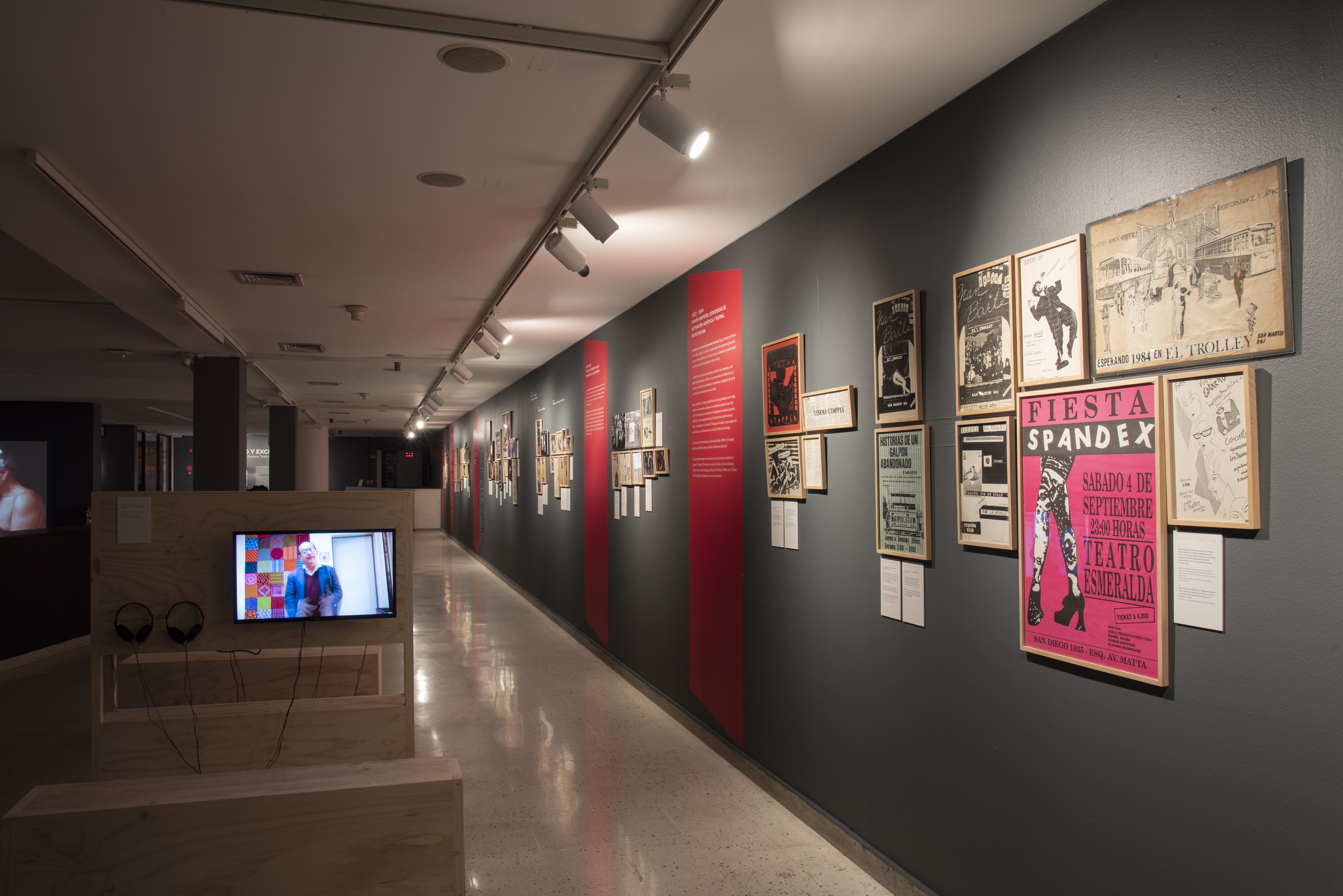
Also, the exhibit considered the creation of a wall with only posters; a selection of 27 posters that we thought to be relevant from a visual and compositional point of view that could help provide another edge of the theatrical phenomenon; the theatrical dissemination from a physical and graphic point of view that needed to be attractive and alluring. We were able to acknowledge that the context of this great material could attract the spectators in a time where the current digital platforms and social media did not exist.
Archive and Artwork; Artwork and Archive
One of the most attractive aspects of this project was that the archive was activated in different formats, beyond the exhibition. After the social riots (October, 2019) and the arrival of the COVID-19 pandemic (March, 2020), the exhibit did not reach the number of audiences we projected initially, as it was only open between January and March of 2020, and then it was opened for just a month in december of the same year. However, we felt moved by the beauty of these pictures and thanks to the economic backing of the already mentioned projects, a year later we published a book and a documentary on the exhibit and Brantmayer’s photographic archive both titled ‘Brantmayer. Frailty and Overruns: Open Archive of the Chilean Theatrical Scene 1983-1992’.
Also, the following year, we did a set of 5 audiovisual short films based on the experiences of the actresses which were photographed by Bratmayer and we developed an encounter and a discussion where we talked with 5 different actresses on the creation process of their characters. This was built around the photographs where they took part. In this way, the archive goes back to the creators in order to build a discussion almost 40 years later. This will allow that “once the event is over, the photograph will continue to exist, thus awarding it a kind of immortality (and relevance) which it never would have enjoyed otherwise” (Sontag, 2006).
Closing reflections
From this project and everything that has been reflected on, we can state that the work is not only based on the treatment and mediation of archives, but also in the relationship of the visual and the theatrical historiography. The most notable idea in relation to the ‘Open Archive’ allows us to conclude that, in this case, the original archive -the photographs-, are images, artworks and documents that account not only for the photographic work but also for the artistic and theatrical work. We can be reassured that the photographic archive allowed for the reconstruction of a given piece or theatrical staging within a context that in the present can be considered as a social activation. In this case, the people that were called to be part of the project built documentation that brought even more material and a new archive. In this way, the archive holds a piece that at the same time produces a new archival work.
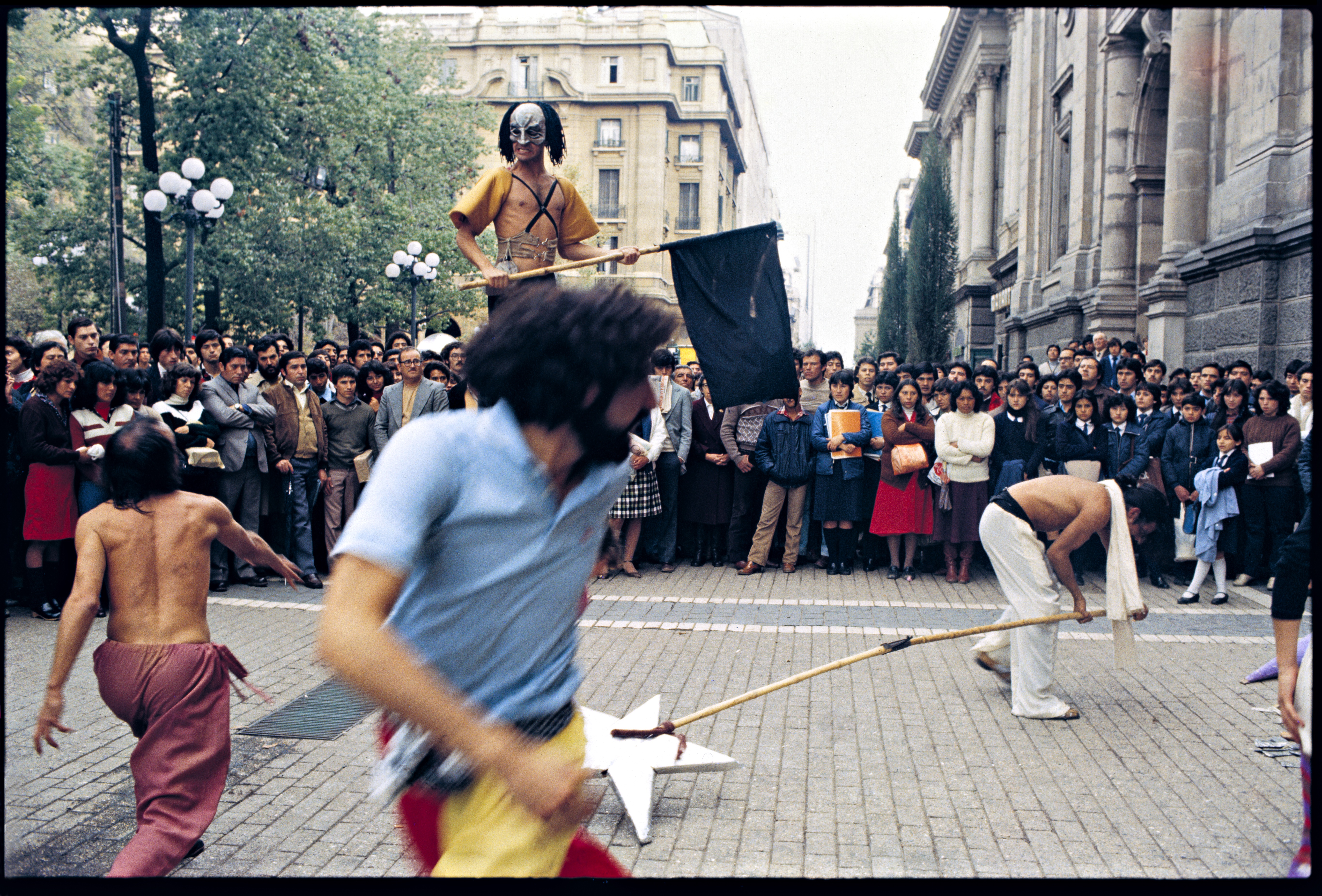
Besides the generation of new archives, the archive in itself is dismembered, analyzed, reinterpreted and represented by new views that exceed the original work of the photographer. From this treatment and approach, new stories that are more complex can re-articulate the past history. Once more, we note that this open and never-ending memory can be activated and pierced in order to reconstruct itself in a collective network. In this manner, the individual work originated from a photograph of the theatrical play, can transform into a sustainable and shared piece by all members of the community. One of the most attractive phenomena of this exhibit is that it portrays a theatrical community that can relate with the artwork from different conceptual devices, which can be re-discovered and activated in the present memory.
Bibliography
-
Azoulay, A. (2014) Historia potencial y otros ensayos. Editoria T-e-eoría, DF, México.
-
Carnevale, G.; Expósito, M.; Mesquita, A.; Vindel, J. (2015) Desinventario Esquirlas de Tucumán arde en el archivo de Gabriela Carnevale (Pensar el archivo. Los archivos como legados significantes).
-
Hurtado, M.; Brantmayer, J. (2020) Fragilidad y Excesos: Archivo Abierto de la Escena Teatral Chilena 1983-1992. Ocholibros. Santiago, Chile.
-
Rolnik, S. (2008) Furor de Archivo. Revista Colombiana de Filosofía de la Ciencia, vol. IX, núm. 18-19, 2008, pp. 9-22.
-
Sontag, S. (2006). Sobre la fotografía. Capítulo: En la caverna de Platón.
Notes
-
Maria de la Luz Hurtado, Jorge Brantmayer; Editorial Ocho Libros; Santiago de Chile; 2020. ↩︎
-
Esta revista artística y cultural fue dirigida por Mario Fonseca y en la sección teatral Arcoiris escribían los críticos teatrales Luisa Ulibarri y Eduardo Guerrero. ↩︎
-
This exhibition showed in GAM’s Visual Arts Room in January, March and December of 2020 and financed by 1. Proyecto Fondart Nacional (Folio 488818), línea Artes de la visualidad, Modalidad Exposiciones, convocatoria 2019 titled; “Brantmayer Exhibit: Frailty and Overruns. Open Archive of the Chilean Theatrical Scene 1983-1991” and 2. Proyecto Interdisciplinar ArTeCiH 2018 de la Dirección de Arte y Cultura de la Vicerectoría de Investigación UC: “Jorge Brantmayer’s Photographs 1984-1994: Conflicting creativities for a (re)construction of the period”. 3. Cultural Corporation of the Chilean Chamber of Construction 4.Theater School, PUC and its Research and Archive Program and GAM, Center for the Arts, the Culture and the People. ↩︎